
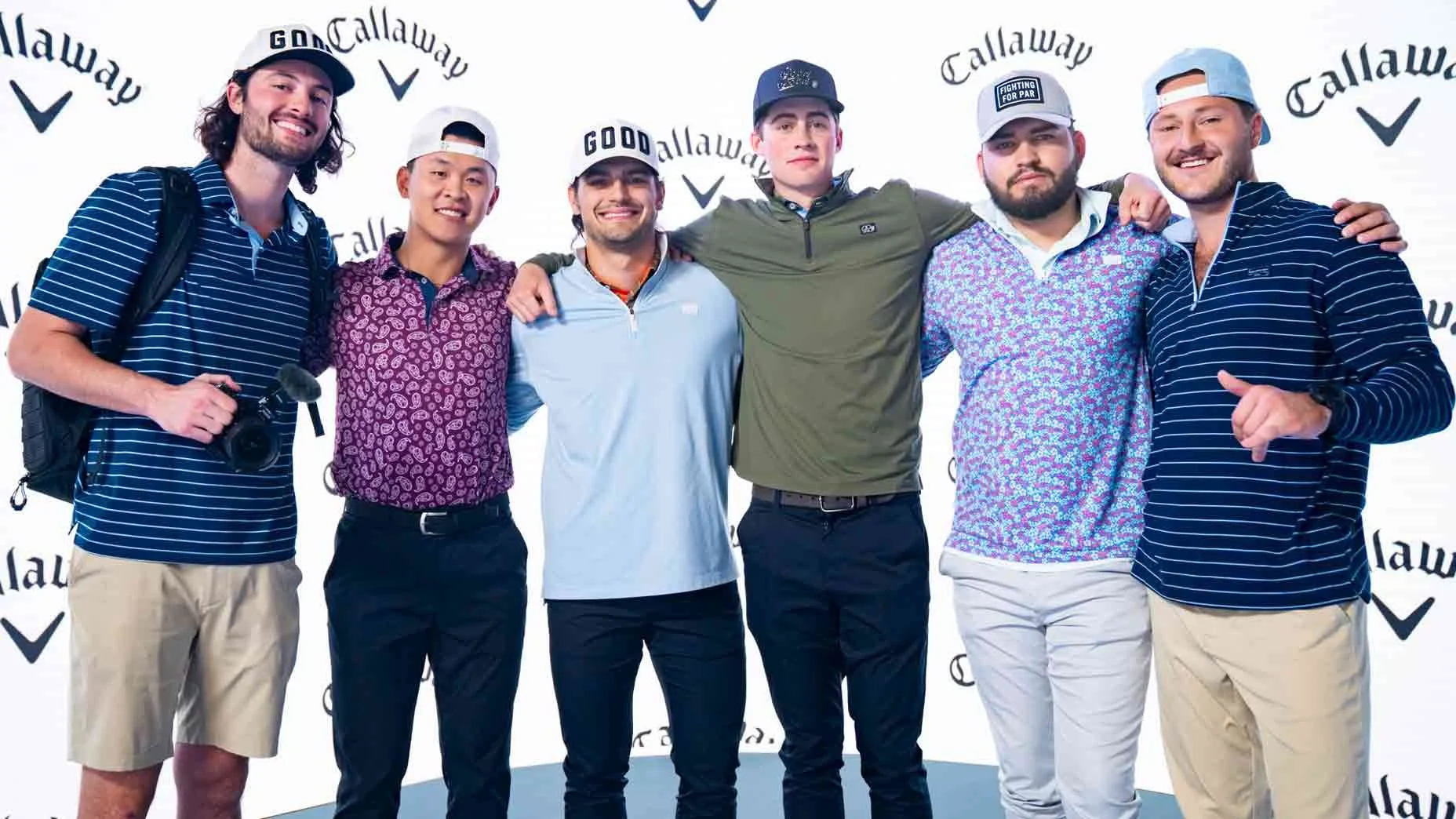
Good Good and Callaway have spent a week showing us exactly who they are under pressure. It has been instructive.
Start at the beginning, because the beginning matters. Good Good Golf released an advertisement for a co-branded driver with Callaway. Co-founder Garrett Clark sprints across a driving range towards Alexis Miestowski as she reaches for the club, shoves her to the ground with his forearms, stands over her and says: "Do not touch my new driver." The video was posted, condemned and deleted within hours. Callaway CEO Chip Brewer confirmed his company approved it before it went out.
What followed was one of the more revealing weeks golf has had in some time.
Good Good's initial statement said the content did not align with the brand's values. The public was not pacified. The PGA Tour CEO called it disappointing, defensive and late. A sponsor pulled out of the Golf Channel's Big Break x Good Good premiere. Then Golf Channel confirmed Big Break will not air in 2026 at all. The Good Good Championship, a $6 million PGA Tour event in Austin in November, is gone. The three-year partnership with Callaway is gone. In the space of a week, the commercial infrastructure Good Good had spent years building was substantially dismantled.
Then came Garrett Clark's personal apology. He said he does not in any way, shape or form support DV abuse. Not domestic violence. DV. Two letters in place of two words that should be said plainly and in full. He expressed concern for Alexis Miestowski receiving violent messages, while having posted the video that created the conditions for them. He pointed at the marketing team. He is a co-founder. He is in the video.
Good Good's most recent statement is a different matter entirely.
Yes. We did it. It was a skit. It was dark humor. And yes, we thought it was funny.
That is a direct quote. The apology has been withdrawn. Good Good are now saying plainly what they actually think, and what they actually think is that the backlash was an overreaction to a comedy skit based on a horror film called The Obsession, and that they are not going to apologise for making a joke simply because the internet decided it did not like the punchline. They do, to their credit in this statement, say the words domestic violence in full. They also say, in four checkboxes: we approved it, Callaway approved it, we made it, everyone was good with it. They end with: no hard feelings, Callaway. Well, maybe we will need a mulligan.
There is something almost refreshing about the honesty of it, if you can separate the honesty from what is actually being said. They mean it. They thought it was funny. They still do. They are not performing contrition they do not feel. The earlier apology was the performance. This is the reality.
The reality is not good enough.
Not because dark humor does not exist or should not exist. Not because comedy cannot push into uncomfortable territory. But because the specific thing they made was a man physically assaulting a woman on camera, presented as entertainment, in an advertisement for a piece of golf equipment. The film reference does not change what was in the frame. Alexis Miestowski was knocked to the ground. That is what people saw. That is what they responded to.
Co-founder Matt Kendrick posted on X alleging that Callaway asked them to make the ad, approved it, then asked them to take the fall before dropping them in a coordinated media blitz and covering it up with the donation. Eight million views. Callaway has not responded. The Good Good statement's four checkboxes — we approved it, Callaway approved it, we made it, everyone was good with it — confirm that both parties were involved. The question of who bears more responsibility remains, publicly at least, unanswered.
Which brings us to Callaway.
A $1 million donation to organisations working to prevent violence against women is a meaningful gesture. It is also, if you are a $2.8 billion company with experienced PR counsel, a very effective way of controlling a narrative. Callaway approved the ad. They had the bigger legal teams, the more experienced communications infrastructure, the greater resources. Their response has been to write a cheque, sever ties publicly and let Good Good absorb the majority of the reputational damage. Nobody talks about Callaway's role in approving the ad when Callaway is pledging $1 million to anti-violence organisations. The narrative shifts from "Callaway approved this" to "Callaway did the right thing." Good Good, with fewer resources, less PR firepower and co-founders posting on X at 8am looking like they are lashing out, end up holding most of the wreckage.
Kendrick's allegation may be self-serving. It may also be substantially true. The two things are not mutually exclusive.
The standard for this kind of apology is not complicated. Say what you did. Say why it was wrong, in full, without acronyms. Say what changes. Do not position yourself as the victim of the consequences of your own actions. Do not point at the marketing team when you are in the video. Do not withdraw the apology a week later and call it a skit.
Callaway, eventually, met most of that standard. Good Good has now explicitly rejected it.
For what it is worth, the ad they should have made was always sitting in the name of the company. Various golfers. Various courses. Various levels. Each one hits a drive and turns to ask: we good? Final shot. Good Good co-founder steps up, hits the drive, turns to camera. We good? We Good Good. Driver reveal. We are not marketing experts. But the simplest idea was right there, and it did not require anyone to be knocked to the ground.
Golf is at its best when it opens the door wider. That was true before any of this happened. It remains true now. Good Good built their audience by making golf feel more accessible, more fun, more like something real people do. That is genuinely valuable and the sport is better for it. This week has not changed that history. But it has raised a serious question about whether the culture inside Good Good understands what that mission actually requires of them.
No hard feelings. Well, actually, a few.
Someone should have said no. Nobody did. And a week later, Good Good are still saying they were right not to.