
Let us be clear before we say anything else. This is not a woke take. We are not here to lecture. We are a platform that believes golf is more interesting, more fun and more successful when more people feel welcome in it. That is not a political position. It is just true. So when something happens that cuts against it, we are going to say so plainly and move on.
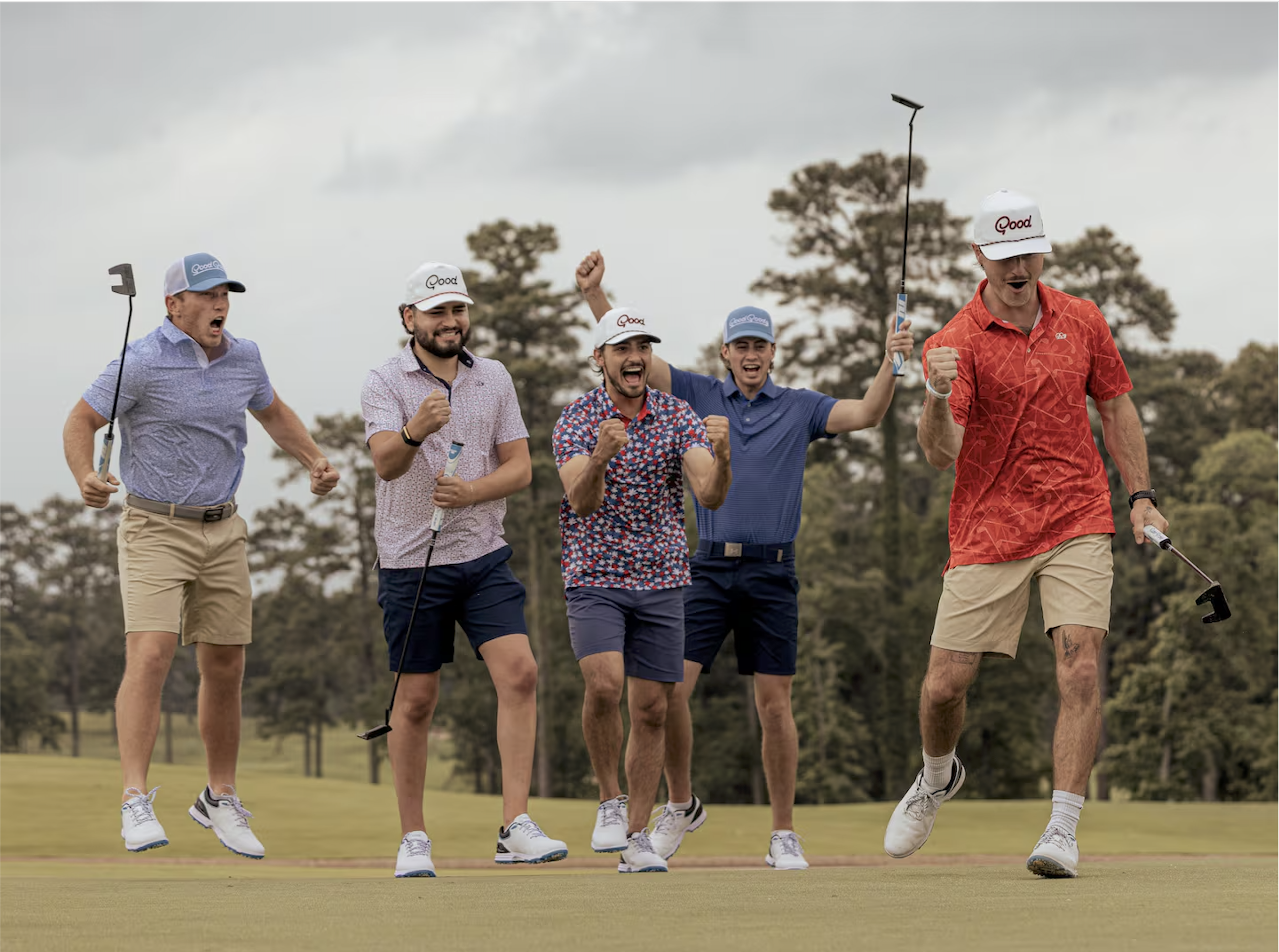
Last week, Good Good Golf released an advertisement for a co-branded driver with Callaway. Co-founder Garrett Clark sprints across a driving range towards Alexis Miestowski as she reaches for the club, shoves her to the ground with his forearms, stands over her and says: "Do not touch my new driver." The video was posted, condemned and deleted within hours. Callaway CEO Chip Brewer confirmed his company approved it before it went out.
That was the beginning of the story. It has not stopped since.
By Tuesday, Callaway had announced both internal and external investigations into how the ad got through its approval process, and confirmed it had already changed its approval procedures. CEO Chip Brewer stated the company is unequivocally against discrimination, domestic violence or threatening behaviour of any kind. The PGA Tour CEO Brian Rolapp, speaking ahead of the Tour Championship, called Good Good's initial response disappointing, defensive and late. He made clear the Tour would continue to monitor the situation before determining whether Good Good would remain involved in the Good Good Championship, a $6 million event scheduled for Austin in November and one of eleven remaining events on this year's PGA Tour schedule. That is not a warning shot. That is a consequence.
This is what happens when the apology does not match the original error.
Good Good's initial statement said the content did not align with its values as a brand. Fans were not buying it. An apology that does not acknowledge what specifically went wrong, who specifically made the decisions, and what specifically is going to change is not an apology. It is a holding position. The speed and scale of the reaction from the PGA Tour suggests that the organisations connected to Good Good had already made their assessment of the situation before the statement landed.
There is something particularly dispiriting about seeing Callaway's name at the centre of all of this. This is not some faceless equipment startup trying to grab attention. This is the company that gave us the Big Bertha. A brand that generations of golfers grew up wanting a piece of, not because it was cool in a content sense, but because it made genuinely brilliant equipment that changed how people played the game. The desperation to stay relevant in an influencer world is understandable. Every heritage brand feels it. But there is a version of that partnership with Good Good that does not involve shoving a woman to the ground, and the fact that nobody found it suggests the brief was never really thought through in the first place.
The detail worth dwelling on is who Alexis Miestowski actually is. Not a random woman who wandered onto a driving range. A former Division I collegiate golfer and a member of the Good Good team. She was specifically chosen for this ad. And at no point in the creative process or the approval chain did anyone apparently think that casting a female team member as the person to be knocked to the ground by a male co-founder deserved a second look.
That is not an accident. That is what a culture looks like when it has not properly asked itself who it is actually for.
Here is the irony that makes all of this so damaging. Good Good's entire brand is built on making golf feel less intimidating, less exclusive, more like something real people actually do. They built their audience by broadening the sport's appeal. That is genuinely valuable work and golf is better for it. This ad is a direct contradiction of everything that brand stands for. The audience that Good Good spent years building, younger golfers, women taking up the sport, people who felt golf was not for them until recently, is precisely the audience that looked at this content and felt confirmed in every doubt they had ever had about whether the sport was really changing at all.
Golf has spent the last decade doing serious work to broaden its audience. Women's participation is growing faster than almost any other demographic. One ad does not erase all of that progress. But the scale of the institutional reaction this week tells you something important: the people and organisations that have invested in golf's growth understand exactly what is at stake, and they moved quickly to protect it.
The investigations have been announced. The approval processes have been changed. The apologies have arrived. We take those at face value, because the alternative is cynicism and cynicism is not useful here.
But an apology and an investigation explain what went wrong after the fact. They do not explain how five layers of experienced decision makers in two major organisations looked at this content and concluded it was ready to go. That question has not been answered yet. It needs to be, not for the purposes of further punishment, but because the answer will tell you whether what happened was a failure of process or a failure of culture. Those are very different problems with very different solutions.
Golf is at its best when it opens the door wider. TCE exists because we believe that. Good Good was built on the same idea. Which is exactly why this matters, and why the consequences of this week are not just about one bad ad.
Someone should have said no. Nobody did. And now everyone is paying for it.