
The career Grand Slam is golf's most brutal arithmetic. Four majors, four different weeks, four different courses, across however many years your body and nerve will allow. Only five men in the history of professional golf have completed it. Tiger Woods needed eleven years between his first major and his fourth. Rory McIlroy needed sixteen, and when he finally holed the putt at Augusta this April, grown men cried in the car park. It is not a storyline that requires embellishment. It is already one of the great narratives in sport.
So when Netflix announced a comedy series built around a fictional golfer chasing the same dream, one Major short, talent fading, legacy complicated, the timing felt almost too good. The Hawk landed in July 2026, weeks after McIlroy's Masters. The cultural moment was already primed. The audience already understood, at a bone-deep level, exactly what was at stake. All the show had to do was respect the material it had been handed.
It did not always manage this.
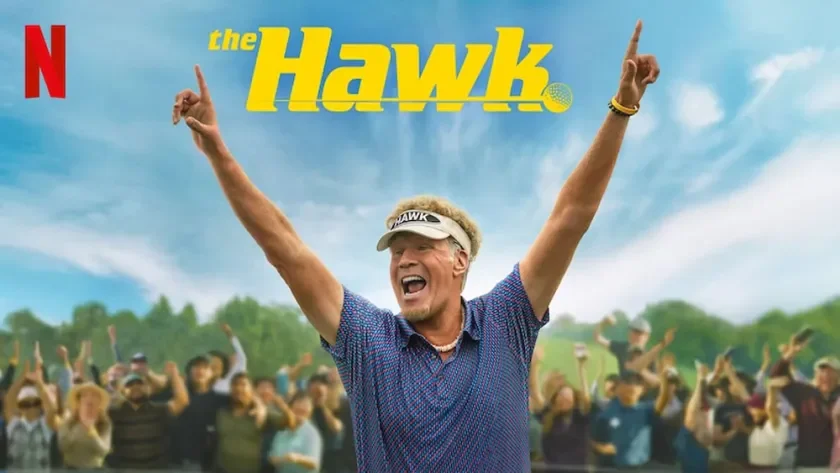
There is a good version of The Hawk, and to be fair to it, that version appears in patches. Will Ferrell's Lonnie Hawkins is a more considered performance than the marketing suggested. He is selfish and deluded in the way that elite athletes often genuinely are, and Ferrell resists the temptation to make him purely comic. In the quieter scenes, particularly opposite Jimmy Tatro, whose Lance is one of the more believable portraits of a son trying to escape his father's shadow that television has produced in some time, you can feel the show it was trying to be. These two have genuine chemistry, and the golf rivalry between them, father against son on the same tour, is a premise rich enough to sustain several series if the writing around it were up to the task.
Fortune Feimster as Sam, the caddie who knows nothing about golf but matches Lonnie beat for beat, provides something rarer still: warmth that is actually earned. The friendship between Lonnie and Sam is the emotional spine of the series, and when the show trusts it, the results are consistently good. Feimster is doing something genuinely skilled here, threading physical comedy through a character who also needs to function as the audience's moral anchor. In a better-written series, she would be the breakout.
The problem is everything the writers did when they stopped trusting their best material.
The pickle jar. It is difficult to write about The Hawk without addressing the pickle jar, so we will address it directly and move on. In the episode in question, Lonnie injures his hand and spends a substantial portion of the runtime with a condiment vessel attached to it. The injury itself goes nowhere. It adds nothing to the plot, nothing to the character, and resolves without consequence. It exists because someone in the writers' room thought it would be funny, and it is the single clearest illustration of the gap between the show The Hawk wanted to be and the show it occasionally became.
The unfinished arcs are a more serious problem because they suggest something structural rather than tonal. Stacy, Lonnie's estranged wife played by Molly Shannon, is given a drinks venture storyline that builds carefully and then simply stops. The setup is there, the connection to Golden Fisk is there, the dramatic potential is there. The payoff is not. Natalie, Lance's fiancée, discovers enough on his phone to become the most interesting character in the series at the midpoint. She is then written out of proceedings so quietly you half wonder if it happened in an edit. Lance himself builds towards a resolution with his father that the whole series has been pointing at, and arrives somewhere between a shrug and a cliffhanger.
The Sam storyline, which should have been the show's hidden ace, is the most frustrating near-miss. Her father's involvement has the shape of a genuinely good twist, something with real dramatic consequence. The show trades it for a Vegas sequence, a robbery subplot, and a Tony Hawk cameo. The sense of a writers' room that kept finding its best ideas and then losing its nerve is overwhelming by the final episode.
Ted Lasso is the comparison that will follow The Hawk around, and it is not a comfortable one. That show had a concept just as commercially obvious, fish out of water, sport as metaphor, family underneath everything, and it combined it with writing that actually finished its sentences. Character arcs landed. Jokes had consequences. The warmth was earned over time rather than assumed from the premise. Full Swing, the Netflix golf documentary that demonstrated what happens when you simply trust golf to be interesting, understood the same thing from a different direction. The sport does not need to be made ridiculous. It is already extraordinary.
The Hawk had all the ingredients for something genuinely special. The timing was perfect, the cast was capable, the premise was sound, and the cultural moment was right. What it needed was a writers' room with the discipline to follow through on what it started.
Worth watching for Feimster and Tatro. Worth watching for the moments when Ferrell remembers he is capable of more than escalation. Worth watching, if you are generous, for the show underneath the show, the one pressing against the surface in the better episodes.
Not worth watching for the pickle jar, which is already the answer to a pub quiz question nobody wanted to ask. A second series would do well to leave it in the jar.